Chart journal · 4 June 2026
Three sheets before tea
The tea is poured at 10:20. The three sheets have to be able to stand on their own by then.
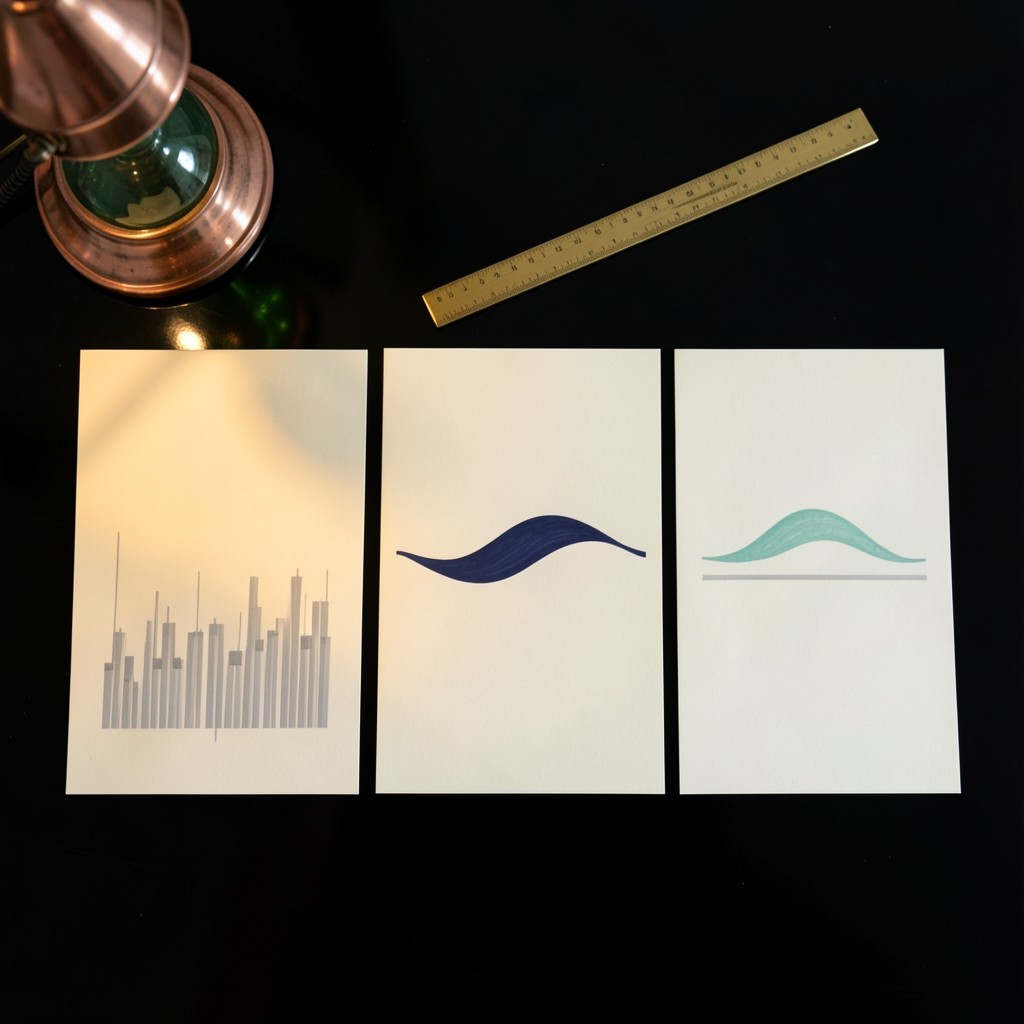
Every classroom Saturday uses the same drill in the first half of the morning. Three sheets. No talking across the table until each person has written a line on each. The tea goes out at 10:20, and the line on the third sheet is either done or it is not. We learned to keep the clock because, without it, the room discusses the third sheet before the first has been seen.
Sheet one, price
Ten to twenty bars, already printed. You mark the swings you would be willing to defend, the bar that closed in an odd place, and any range that broke the pattern of the bars before it. You may not mention RSI. If the word 'overbought' appears on this sheet, it is crossed out and the sheet is started again. Overbought is not a description of price.
Sheet two, momentum
The 10-bar rate of change, printed on its own page so it cannot hide inside the price. You say whether the peaks in momentum agree with the peaks you marked on sheet one. A higher price peak with a lower momentum peak is a disagreement. A higher price peak with a higher momentum peak is agreement. Write one of those two words, then one sentence. We do not want a paragraph yet.
Sheet three, RSI
14-period RSI, fences at 30 and 70 already ruled in a light line. You may darken a fence only if price actually interacted with that region. Then you compare this sheet with sheet two, not only with price. Momentum and RSI can disagree with each other while both seem to agree with a lazy reading of price. That double picture is the one the afternoon review, and the Thursday circle, were built to hold.
At 10:20 the sheets stay on the desk. Tea is taken away from them, on purpose. Pencils smudge when people gesture with a cup. After ten minutes you come back and read your three lines aloud, or you say that a line is missing and why.
The classroom is where these drills are supervised. Back to the journal.